
Economy
- Details
 A new corporate headquarters is arriving in Illinois after cereal and snack food giant, Kellogg, announced that it will move its corporate headquarters to Chicago.
Kellogg produces cereal and convenience foods, including crackers and toaster pastries, and markets their products by several well-known brands including Corn Flakes, Rice Krispies, Frosted Flakes, Pringles, Eggo, and Cheez-It.
In 1894, Company founder, W. K. Kellogg, was assisting his brother in research aimed at improving the vegetarian diet of the sanitarium patients in Battle Creek, Michigan. This led to the invention of Kelloggs’ most famous product, breakfast cereal corn flakes. One night, John Kellogg, W.K. Kellogg’s brother, left a batch of wheat-berry dough sitting out. Rather than throwing it out the next morning, he sent it through the rollers and was surprised to obtain delicate flakes, which could then be baked. W. K. Kellogg persuaded his brother to serve the food in flake form. Soon the flaked wheat was being packaged to meet hundreds of mail-order requests from guests after they left the Sanitarium. W. K. launched the Battle Creek Toasted Corn Flake Company on Feb. 19, 1906. Convincing his brother to relinquish rights to the product, Will's company produced and marketed the hugely successful Kellogg's Toasted Corn Flakes and was renamed the Kellogg Toasted Corn Flake Company in 1909, taking on the current name of the Kellogg Company in 1922.
- Details
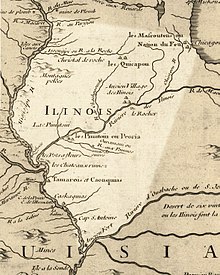 On Dec. 3, 1818 Illinois entered the union as our 21st State. At the time, the estimated population of total European settlers and Native Americans was around 35,000. The treeless prairie was very different from the adjacent forests of Kentucky and Tennessee, and was still largely unsettled. Most of the early Illinois settlers remained in the southern part of the state, where they built homes and farms near the trees that grew along creek and river bottoms. The southern part of the state, known as “Little Egypt,” was mainly settled by migrants from the South, who had traveled there via the Ohio River. Eventually, a few farmers took on the task of plowing the prairie and discovered that the soil was richer than expected. The development of heavier prairie plows and improved access to wood and other supplies, accessible through new shipping routes, encouraged more farmers to head north.
In 1819, Vandalia became the new state’s first capital, and over the next 18 years, three separate buildings were built to serve successively as the capitol building. In 1837, the state legislators representing Sangamon County, under the leadership of state representative Abraham Lincoln, succeeded in having the capital moved to Springfield, where a fifth capitol building was constructed. A sixth capitol building was erected in 1867, which continues to serve as the Illinois capitol today.
The state experienced rapid population growth almost immediately. The 1820 census counted 55,211 Illinois residents, a gain of 16.2% from 1810. Since then, Illinois has gained population in every decennial census, although the rate of growth has slowed. As of 2020, the state is approaching 13 million residents. Since 1840, the center of population in Illinois had shifted to the north. Chicago, once a remote hamlet, rapidly emerged as a bustling city. Today, Illinois is one of the most dynamic and diverse states in the nation and it all began in Dec. 1818.
- Details
 The people of Bloomington are in for a treat, courtesy of the confectionery company Ferrero North America. The company announced plans to spend $75 million in order to expand their factory in Bloomington by 70,000 square feet.
- Details
 |
The Frank Lloyd Wright Trust has announced new plans for a visitor and education center to be built at the architect’s former home and studio. The home, located in Oak Park, has been open as a public museum since 1974.
An estimated 90,000 visitors come to see the property each year. When the property next to the home went up for sale, the trust saw an opportunity and decided to make the purchase.
“It has for a long time been apparent that having a visitor’s center would be an important next step,” said Celeste Adams, the president and chief executive of the trust.
- Details
 According to the latest ranking by U.S. News and World Report, 13 Illinois High Schools have been named among the best in the nation.
The rankings analyzed more than 20,500 public high schools across the country and 13 of Illinois’ public high schools received gold medal ratings. Gold medals were awarded to the top 500 schools, silver medals were given to the schools ranked between no. 501 and no. 2,711 and bronze medals were given to an additional 3,237 schools.
More Articles …
- Eight Illinois hospitals are among the top 100 in the nation
- Bloomington-Normal finished the year with the lowest unemployment rate in the state
- Thanks to IKEA, Joliet is now home to Illinois’ largest solar rooftop
- Illinois is a greener state thanks to a piece of legislation passed one year ago
- The City of Rochelle is proving Illinois business critics wrong


I LIKE ILLINOIS © Copyright 2025