
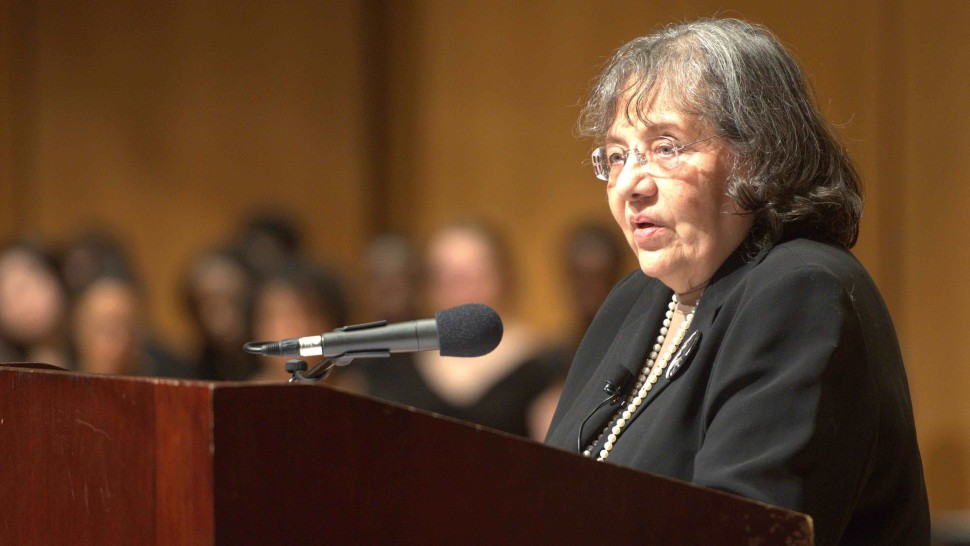
 In honor of Universal Human Rights Month this December, we honor Diane Judith Nash, a key activist throughout the Civil Rights Movement from Illinois. Nash was one of the founders and most influential organizers in the Civil Rights Movement. Born in Chicago in 1938, Nash attended Howard University before transferring to Fisk University in Nashville, Tennessee. In Nashville, Nash experienced a society fully engulfed in Jim Crow segregation for the first time. She began to take classes from James Lawson on nonviolent resistance. It didn’t take long for Nash to become a central figure in the Civil Rights Movement in Nashville, including becoming leader of the Student Central Committee, which staged sit-ins in segregated diners across downtown Nashville. In 1960, Nashville became the first segregated city in the South to integrate lunch counters.
That same year, Nash became a founding member of Student Nonviolent Coordinating Committee (SNCC). She is known for advocating for the “jail, no bail” strategy, believing that remaining in jail would bring more attention to the cause of civil rights leaders than being bailed out immediately. Nash was lauded by Martin Luther King Jr. for her nonviolent efforts as she began to organize Freedom Rides across the South. She participated in the March on Washington and the Selma March, before moving back to Chicago in the 1960s.
After returning to Chicago, Nash continued her activism through advocating for the feminist movement and protesting the Vietnam War. Nash’s organization helped to spread awareness of southern segregation and bring attention to the Civil Rights Movement across the United States. In 1965, she received the Rosa Parks Award from the Southern Christian Leadership Conference. Additionally, she was awarded the Lyndon B. Johnson Award for Leadership and the Presidential Medal of Freedom in 2022.
Nash played an instrumental role in dissolving segregation throughout the South and her work will live on in American history.


