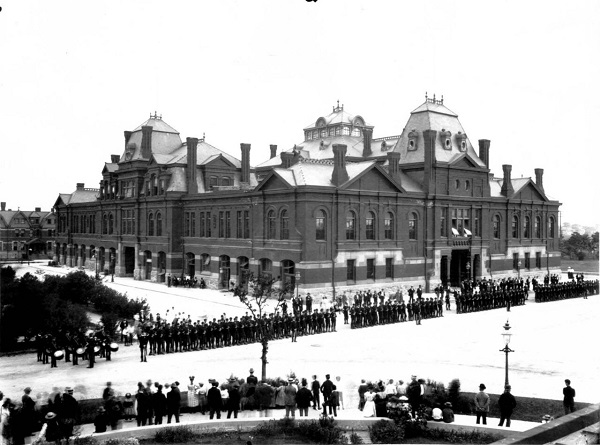
On May 11, 1894, the Pullman Strike began near Chicago, Illinois, later leading to the creation of Labor Day.
During an economic recession, George Pullman laid-off hundreds of employees and cut wages for the remaining workers at the Pullman Sleeping Car Company, a railroad car manufacturer with a company town near Chicago.
While laying off his employees and cutting wages, Pullman refused to implement reductions on rent and other charges in the company town. This lead to a walkout constructed by a delegation of employees, who later voted to strike.
The American Railway Union and its President Eugene V. Debs showed their support toward the workers and declared a sympathy boycott of all trains that used Pullman cars, halting rail traffic and commerce in 27 states.
This spurred the General Managers’ Association into requesting assistance from the federal government to shut the strike down. Having support of President Grover Cleveland’s cabinet, Attorney General Richard Olney demanded federal troops be sent to Chicago. Olney obtained an injunction from a circuit court on July 2, 1894, and President Cleveland ordered troops into Chicago on July 3.
Despite outrage from Illinois Governor John Peter Altgeld, 6,000 federal and state troops, 3,100 police and 5,000 deputy marshals entered Chicago to undermine the boycott, and, in response, on July 6, approximately 6,000 people rioted in the South Chicago Panhandle – destroying hundreds of railcars.
Unable to contain the violence in the city, national guardsmen fired into a group of protestors, killing between four and 30 people and injuring many others. Following this event, the GMA refused to see an end to the strike and instead began hiring nonunion workers.
By the end of July, the strike had dwindled and train schedules began to go back to normal. On July 20, 1894, federal troops were recalled from Chicago, and the Pullman Company reopened on Aug. 2, agreeing to rehire striking workers as long as they pledged to never join a union.
While the railroad workers and Pullman Company were striking, legislation was passed in June of 1894 that declared the first Monday in September as a federal holiday to recognize and celebrate labor and labor unions. President Cleveland signed the bill into law on June 28, 1894 to appease labor unions after ordering troops into Chicago to stop the Pullman Strike, marking the first year Labor Day was celebrated nationally.
Sept. 7, 2026 marks 132 years since the first Labor Day observance.