
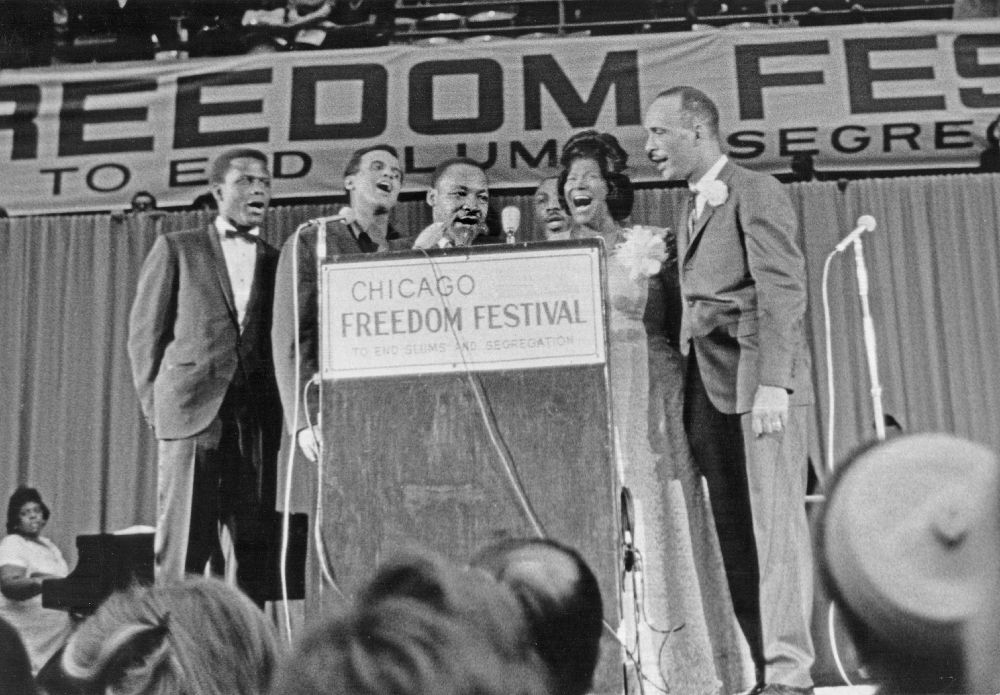
While Martin Luther King Jr. was a well-known figure in the South in his fight for civil rights during the 1960s, there is more than meets the eye to how Illinois added to his legacy during that time.
Following the march from Selma to Montgomery and the infamous Bloody Sunday in 1965, King set his sights on Chicago as the focus of his new campaign to combat housing, economic and educational segregation – called the Chicago Freedom Movement.
Along with a young Jesse Jackson, Dr. King set up offices in different churches across Bronzeville, including the Fellowship Baptist Church, New Friendship Baptist and Stone Temple Baptist. To demonstrate his commitment to the campaign and the issues at stake, Dr. King moved his family into one of the neglected tenements in North Lawndale. Although the house no longer exists, the location is now the site of the Dr. King Legacy Apartments and Fair Housing Exhibit Center.
Dr. King’s campaign in 1965 had demonstrated the hostility that white Chicagoans had for King and his movement, trying to preserve the power structure that had kept whites in power for decades in the City of Broad Shoulders. During a nonviolent march through an all-white neighborhood in August 1966, Dr. King and the marchers encountered racially fueled hostility. Dr. King was struck by a rock amongst the bottles and bricks being thrown at marchers. Dr. King noted that, though he had seen many demonstrations, the hostility shown in Chicago was unlike anything he had ever seen.
Despite the racial tensions and the hostile attitudes brewing in Chicago, Mayor Richard J. Daley bowed to the pressure that the marches were putting on him to do something about the race riots and violence that came with the demonstrations. Daley negotiated with housing boards to create a summit agreement where the Chicago Housing Authority promised to build affordable housing and the Mortgage Bankers Association agreed to make mortgages available to people, regardless of race.
Although Chicago city officials failed to make good on their promise for increased housing equity despite the summit agreement, it is no secret that the actions taken here by Dr. King would lead to the federal Fair Housing Act of 1968, which was signed shortly after his assassination. Dr. Martin Luther King Jr.’s legacy in Illinois was not only one of hostility and broken promises but also one of empowerment and determination for African Americans across the nation.