
 NASA’s newest space telescope was recently launched into the atmosphere, and Illinois had a part to play in making that happen.
One of the scientists involved in building the telescope was an Urbana native, giving Illinois an interesting connection to the new space exploration tool.
Ami Choi was the deputy wide field instrument scientist for the development of the Nancy Grace Roman Space Telescope, which launched from the Kennedy Space Center on Aug. 30. Choi grew up in Urbana and attended University of Illinois Laboratory High School, so Illinois is home for her.
However, Choi has spent the last four years at the Goddard Space Flight Center in Greenbelt, Md., focusing on the telescope’s design. One of her priorities for the project was the communications between engineers designing the telescope and scientists measuring dark matter, exoplanets and dark energy, working to ensure that the telescope can fulfill the observations NASA is hoping to find.
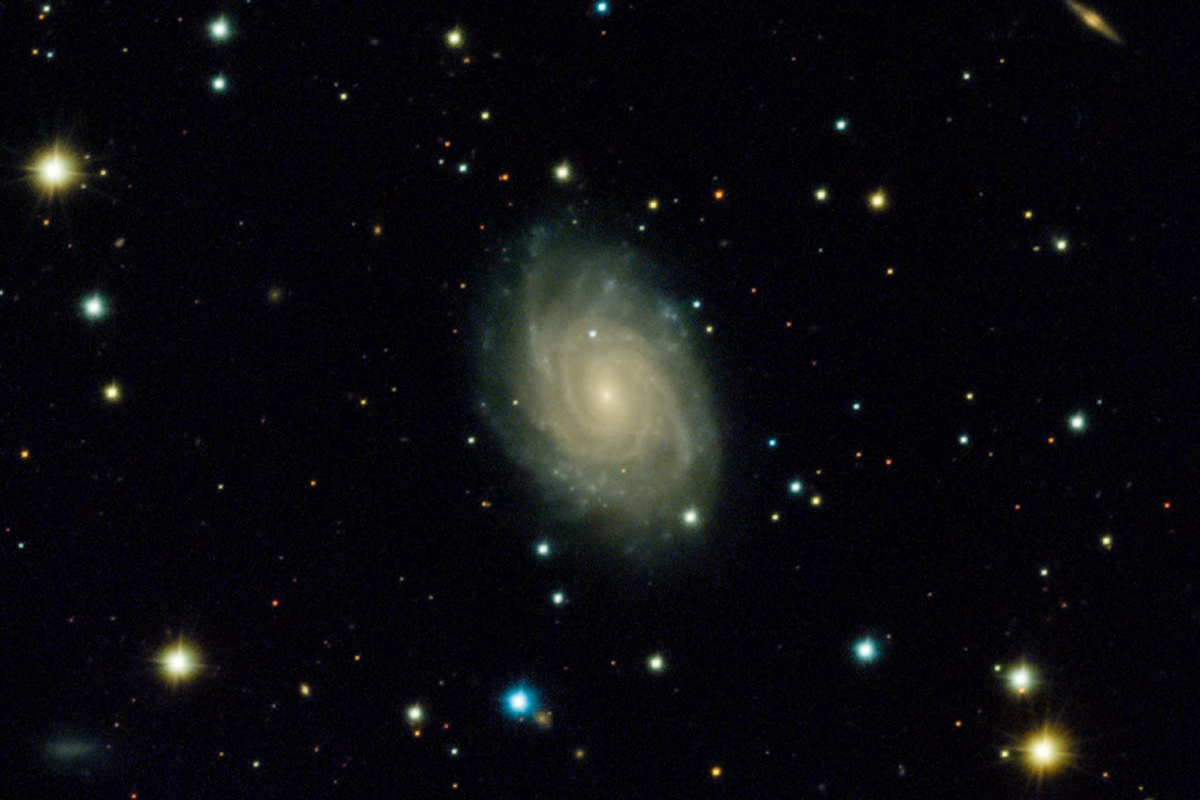
For the next five years, the Nancy Grace Roman Space Telescope will orbit the sun and be about one million miles away from Earth. The telescope will take high-resolution images of the sky, with a field of view that is 100 times larger than the Hubble Space Telescope. These images will help scientists see the universe’s outer edges and understand the forming and evolution of exoplanets.
The images will also be available to the public right away, as there is no proprietary period for this project’s data. The project’s goals include better understanding dark matter and dark energy, the impact of dark matter and dark energy on the universe’s evolution, and looking for undiscovered planets beyond our solar system.
Nancy Grace Roman, who the telescope is named after, was NASA’s first chief of astronomy and a trailblazer for women in the science field. The Nancy Grace Roman Space Telescope’s initial name was the Wide Field Infrared Survey Telescope, but it was changed to honor Roman’s involvement in developing NASA’s astronomy program, which led to her nickname, “the Mother of Hubble.”


